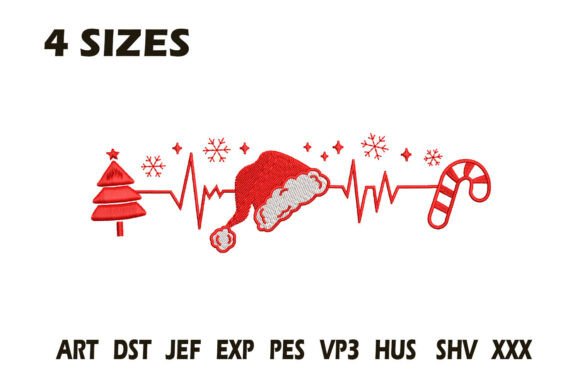
Candy Cane Christmas Holiday Embroidery
First Impression: Festive, Friendly, and Instantly Recognizable
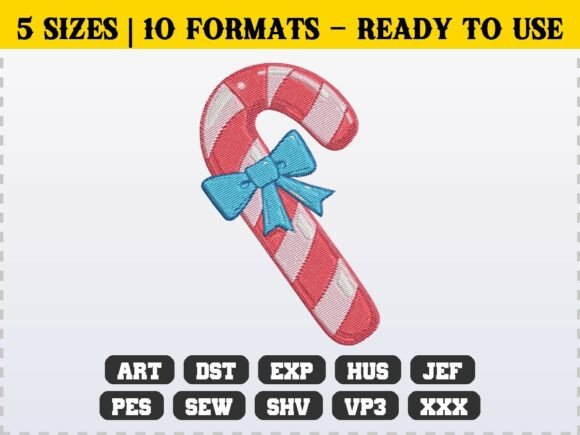
As an embroidery designer who’s prepped over 200 craft fair booths, I can tell you—Candy Cane Christmas Holiday Embroidery lands with cheerful clarity the moment a customer glances at your table. It’s not minimalist or ironic; it’s warmly festive, with strong visual rhythm from the red-and-white stripes and a thoughtful pop of blue in the bow. That blue isn’t just decorative—it adds contrast, depth, and a subtle modern lift to an otherwise classic motif. It reads as handmade but polished, nostalgic but not dated. Shoppers don’t pause to decode it—they smile, point, and reach for the tote bag.
Where This Design Shines on Craft Fair Products
This machine embroidery design thrives where charm meets utility. On a natural linen tea towel? Perfect—clean lines hold up beautifully against textured fabric, and the candy cane’s vertical shape balances the towel’s proportions. On a canvas tote bag? It works best centered near the top third—not too small to read, not so large it overwhelms. As an apron embroidery, it shines above the pocket or centered on the bib—especially on denim or medium-weight cotton, where stitch definition stays crisp.
An embroidered patch version sells like holiday candy itself: sewn onto denim jackets, backpacks, or even kids’ knit hats. The bow adds enough detail to feel special without crossing into “too fussy” territory. For pillow covers and small fabric pouches, scale it down slightly—this design retains legibility even at 3.5 inches tall, thanks to its bold stripe spacing and generous bow loops. And yes, it photographs exceptionally well for Etsy listings: high-contrast colors pop against neutral backdrops, and the clean shape translates smoothly into printable mockups.
What Makes It a Smart Choice for Batch Production
Candy Cane Christmas Holiday Embroidery is highly repeatable. Its symmetry, limited color count (red, white, blue), and absence of fine gradients or micro-details mean fewer thread breaks, less re-hooping, and consistent results across dozens of pieces. You’ll get reliable output on standard commercial hoops—no need for specialty frames or multi-position setups. That predictability matters when you’re stitching 40 aprons the night before a Saturday market.
It also scales intuitively: enlarge it for a statement pillow cover, shrink it for a delicate cap front or mini pouch, and keep it mid-size for tea towels and patches. No redesigning required—just smart digitizing that honors proportion and stitch integrity. That’s rare in seasonal designs, and it’s why this one belongs in your core Christmas collection, not just as a one-off.
Real-World Visibility & Booth Impact
In a crowded craft fair aisle, Candy Cane Christmas Holiday Embroidery stands out without shouting. It’s bright but not garish, traditional but not stiff. When grouped with other holiday items—think plaid scarves, cinnamon-scented sachets, or hand-poured candles—it acts as a joyful anchor. Customers notice it first on your booth signage or sample tote, then seek it out on smaller items. That momentum builds impulse buys: “I’ll take the candy cane pouch *and* the matching tea towel.”
For Etsy sellers and small shop owners, this design strengthens brand consistency. Use it across product types with the same thread palette and stitch density, and shoppers begin to recognize your aesthetic—even without your logo visible. That kind of cohesion converts browsers into repeat buyers.
Careful-Use Notes Every Designer Should Check
Even charming designs have limits—and skipping these checks risks disappointing customers or wasting materials:
- Dense stitch areas: The bow’s knot and inner loops carry higher stitch density. Test on your target fabric *with stabilizer*. Too much density on terry cloth towels or thick fleece can cause puckering or stiffness.
- Curved surfaces: Caps and curved market bags require precise hooping and possibly reduced density in the bow’s outer curves. Don’t assume the flat-file version will translate seamlessly.
- Dark fabric: Red-on-black or navy can mute contrast. Confirm thread brightness—opt for high-sheen polyester or metallic-look red if needed. Always test thread colors on your base fabric.
- Small sizes: Below 2.75 inches tall, the stripe definition and bow details soften. Avoid using this design smaller than that on patches or keychains unless the digitizing specifically optimizes for miniaturization.
- Fabric texture: Highly napped fabrics (like sherpa or heavy terry) may obscure stripe edges. Choose tighter-weave cottons, linen-cotton blends, or smooth twills for maximum clarity.
Essential Embroidery Designer Prep Checklist
Before cutting your first production run, do these six things:
- Test the digital embroidery file on scrap fabric *identical* to your final product—same weight, weave, and finish.
- Verify thread contrast by stitching a swatch on both light and dark versions of your chosen fabric.
- Review spacing between stripes and bow elements—tight gaps may fill in on dense fabrics or with low-tension settings.
- Confirm hoop size compatibility with your machine and intended product (e.g., cap frames vs. standard hoops).
- Inspect stitch density in the bow knot and candy cane curve—adjust if needed for your fabric + stabilizer combo.
- Create at least one real-world mockup: stitch it on your actual tote bag or tea towel, photograph it in natural light, and compare it to your Etsy listing visuals.
And one non-negotiable: double-check licensing. If you’re selling finished products—not just the embroidery file—you need commercial use rights. Don’t assume “holiday design” means blanket permission. When in doubt, contact the creator or vendor directly before your craft fair weekend.
Final Thought: A Reliable Workhorse with Heart
Candy Cane Christmas Holiday Embroidery isn’t just another seasonal download. It’s a well-considered craft fair product asset—balanced, versatile, and emotionally resonant. It elevates a simple tote into a giftable handmade product. It adds warmth to a kitchen display without cluttering it. And for embroidery business owners, it’s a dependable seller that supports batch production, clear branding, and authentic connection with holiday shoppers. Done right—with attention to fabric, stabilizer, and scale—it doesn’t just say “Christmas.” It says “handmade with care.” And that’s what people pay for at the booth, online, and beyond.