Gingerbread Boy Embroidery
First Impressions: Whimsy, Warmth, and Wearable Charm
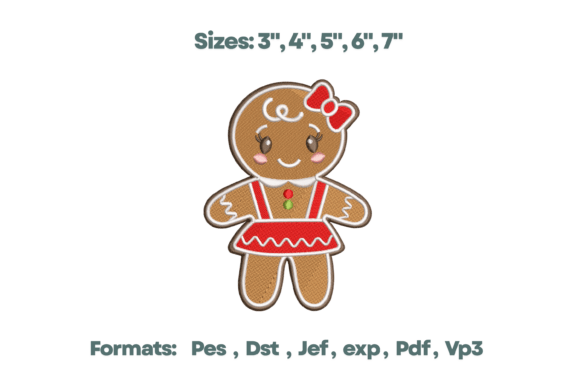
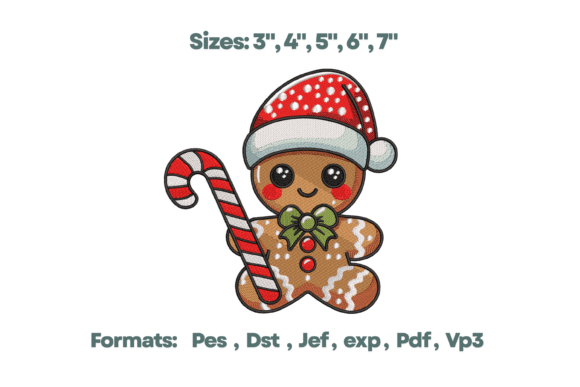
As an embroidery designer who’s stitched holiday collections for boutique brands from Portland to Dublin, my first glance at Gingerbread Boy Embroidery lands with instant recognition — this isn’t just another clipart-style motif. It’s a character-driven machine embroidery design built for emotional resonance: a plump, smiling gingerbread boy holding a candy cane, radiating playful nostalgia. The description hints at intentionality — “adorable,” “festive,” “joy of the holidays” — and that tone carries through in how the design likely balances clean outlines with subtle textural cues (think piped icing lines or gentle cookie crumb shading). On neutral sweatshirts — oatmeal, heather grey, or soft ivory — it reads as cozy and elevated; on charcoal or navy, it pops with cheerful contrast without shouting. Pastel pinks or mint hoodies? It leans into gentle, modern whimsy. Oversized silhouettes? The composition feels spacious enough to anchor a chest placement without shrinking visually.
Sweatshirt Embroidery in Action: Placement, Proportion & Personality
This Gingerbread Boy Embroidery thrives where apparel meets storytelling. For a boutique brand’s limited Christmas drop, I’d place it centered on the chest of a relaxed-fit crewneck — not too high, not too low — letting the candy cane’s diagonal tilt add subtle energy. On a hoodie, it works beautifully above the left pocket or subtly on the sleeve cuff for a wink of seasonal detail. As a back design? Scale it up slightly — the rounded shape and friendly face hold up well at 4–4.5 inches, turning the garment into a conversation starter. What makes it especially strong for small shop product presentation is its inherent handmade product warmth: it doesn’t feel mass-produced or digitally stiff. It invites touch, evokes memory, and supports lifestyle photography — think steaming mugs, wool socks, and sunlit living rooms. In mockups, it reads clearly even at thumbnail size, boosting Etsy listing appeal and social scroll-stopping power.
Stitching Realities: Thread, Texture & Technical Trust
Before hooping a single sweatshirt, I assess three non-negotiables: thread color contrast, stitch density, and stabilizer strategy. With Gingerbread Boy Embroidery, high-contrast thread choices are essential — deep red for the candy cane, warm brown for the cookie, crisp white for icing details — especially against dark fabric. If the file uses satin stitches for the candy cane or outline, those areas must be dense enough to prevent puckering on thick fleece but not so dense they crack after washing. That’s where stitch density matters: too light, and the design fades; too heavy, and the fabric stiffens unnaturally. For heavyweight sweatshirts, I’d pair this with a medium-weight cutaway stabilizer — it supports the curves and angles without adding bulk. On lighter French terry or brushed cotton blends? A tear-away with light spray adhesive keeps drape intact. Crucially, the smallest elements — like the candy cane’s stripes or the gingerbread boy’s eyes — need to remain legible at standard chest sizes. If scaled down below 3 inches, test stitch first: fine details can blur or vanish on looped knit textures.
Commercial Fit: Does Gingerbread Boy Embroidery Earn Its Place?
Absolutely — but only when treated as a strategic design asset, not just decoration. This embroidery file elevates perceived value: customers pay more for garments that feel intentional, nostalgic, and tactile. For an Etsy seller or independent apparel decorator, using Gingerbread Boy Embroidery signals craftsmanship and seasonal curation — it’s not generic; it’s *chosen*. That builds buyer trust. When repeated across a collection — matching aprons, tote bags, even gift tags — it strengthens visual recognition and brand identity. And because it’s inherently joyful and inclusive (no gendered styling, no cultural overreach), it encourages broader customer engagement. That said, its success hinges on execution: sloppy hooping, mismatched thread sheen, or poor stabilizer choice will undermine the handmade presentation instantly. This isn’t a “set-and-forget” digital embroidery file — it rewards attention to detail.
Design Versatility Beyond the Sweatshirt
While sweatshirt embroidery is its sweet spot, Gingerbread Boy Embroidery shines across complementary products. Stitch it onto denim jacket pockets for a rustic-chic twist. Resize it modestly for stocking cuffs or tea towel hems. Use it as a focal point on holiday-themed aprons — the candy cane adds movement, breaking up solid fabric. Even as a printable mockup element for digital listings, its balanced proportions and clear silhouette make it ideal for clean, professional visuals. For a small clothing brand building a cohesive holiday story, this hoodie design becomes a unifying thread — literally and figuratively — tying together apparel, accessories, and gifting.
Final Notes for the Thoughtful Creator
Gingerbread Boy Embroidery delivers what it promises: festive warmth, approachable charm, and commercial flexibility. It leans playful and decorative — never minimal, never stark — making it perfect for brands that prioritize heart over hype. It feels premium when executed well, casual when styled simply, and always unmistakably *handmade*. Before launching your boutique’s holiday collection, confirm key technical specs: hoop size compatibility (especially for oversized hoodies), recommended fabric weight range, and whether the file includes color-separation guidance. Since the original description mentions use on “festive outfits, aprons, stockings, or…” — note the trailing “or” — verify full usage rights if planning for wholesale or extended product lines. Ultimately, this Christmas embroidery design earns its place not by complexity, but by clarity of feeling: one stitch at a time, it wraps wearers — and buyers — in the quiet magic of the season.