The Joy of the Lord Is My Embroidery
A Designer’s Real-World Review for Small Business Merchandise
As an embroidery designer who’s digitized and stitched thousands of designs for small businesses—from artisan bakeries to faith-based boutiques—I approached The Joy of the Lord is My Embroidery with both curiosity and practical scrutiny. This isn’t just another decorative motif—it’s a statement piece meant to carry meaning, brand voice, and wearability across real-world merchandise. From first glance, the title signals reverence and warmth—neither overly formal nor casually trendy. It reads as sincere, grounded, and quietly confident: ideal for businesses that value authenticity over flash.
First Impression: Professional, Handcrafted, and Brand-Ready
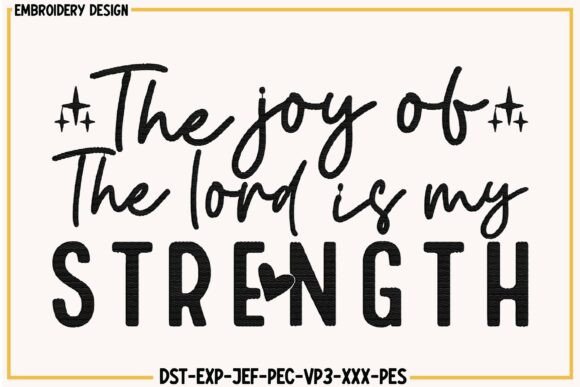
The Joy of the Lord is My Embroidery lands as a classic yet approachable machine embroidery design. It avoids excessive ornamentation or script-heavy complexity—critical when scaling for commercial use. The phrasing suggests a gentle rhythm, which translates well into balanced letter spacing and natural line breaks. For a small business owner choosing a chest logo for staff aprons or a subtle sleeve accent on tote bags, this design feels intentional—not generic, not rushed, and never “clip-art.” It carries the quiet authority of handmade product ethos while supporting clear brand identity in faith-aligned retail, creative studios, or community-centered shops.
Where It Shines in Business Applications
- Embroidered patches: Works beautifully as a sew-on or iron-on patch for boutique merchandise—think floral shop aprons, pet brand bandanas, or café staff jackets. Its balanced composition holds up at 2.5"–3.5" widths without losing legibility.
- Cap embroidery: Clean enough for front-panel placement on structured caps—especially when paired with minimal branding (e.g., a small cross or leaf motif beside the text). Avoid full-curve crowns unless digitized for stretch; test on low-profile fabric first.
- Tote bag design: A standout on natural canvas or linen totes—ideal for churches hosting community events, Christian bookshops, or handmade soap brands offering customer gifts.
- Apron embroidery & custom apparel: Perfectly sized for left-chest placement on cotton or poly-cotton blends. Reads clearly even after repeated laundering—provided proper stabilizer and thread colors are selected.
- Product packaging accents: Use as a subtle embroidered label on fabric gift tags, drawstring pouches, or reusable produce bags sold by farm-to-table vendors or wellness studios.
Use With Intention—Not Everywhere
While versatile, The Joy of the Lord is My Embroidery requires thoughtful placement. Avoid shrinking it below 1.75" wide—tiny lettering risks poor stitch definition, especially on textured fabric like burlap or heavy twill. Cap fronts with tight curvature may distort delicate word spacing unless the embroidery file includes underlay adjustments. On dark uniforms (navy, charcoal), verify thread color contrast: cream or ecru may fade visually; off-white or light gold often delivers stronger recognition. Also, high stitch density—common in tightly kerned script—can stiffen lightweight fabrics. Always assess hoop size compatibility before batching orders; some versions may require larger hoops than standard 4x4" setups.
How It Strengthens Your Brand Identity
For small businesses rooted in purpose—whether a neighborhood florist quoting scripture on seasonal cards or a craft studio selling faith-inspired home goods—The Joy of the Lord is My Embroidery adds emotional resonance without sacrificing polish. It builds customer trust by signaling intentionality: this isn’t mass-produced filler—it’s a considered design asset. When used consistently across staff uniforms, customer totes, and event merch, it reinforces visual consistency and deepens recognition. Buyers connect more readily with handmade presentation when typography feels human-scaled and spiritually grounded—not templated or algorithmically generated. That authenticity lifts perceived product value and encourages repeat engagement, especially in Etsy branding and local market settings.
Practical Notes Every Embroidery Designer Should Check
- Test in black and white first. Confirm readability and spacing without color distraction—this reveals hidden compression or awkward kerning.
- Verify small-patch viability. Resize to your most common patch dimension (e.g., 2.25") and stitch out a sample before client approval.
- Review thread color contrast. Print a color swatch guide alongside your base fabric samples—light thread on light fabric rarely reads well in daylight.
- Inspect spacing and stitch direction. Tight phrases like “The Joy of the Lord” need clean separation between words to avoid thread nesting or shadowing.
- Confirm hoop size and format compatibility. Ensure the digital embroidery file supports your machine (PES, DST, JEF, etc.) and fits your standard hoop without repositioning.
- Test on real fabric. Run a sample on the exact material you’ll use—canvas, denim, twill—using appropriate cutaway or tear-away stabilizer.
- Create a printable mockup. Present clients with realistic visuals showing scale, placement, and context—not just isolated design files.
- Compare beside other design assets. Does The Joy of the Lord is My Embroidery harmonize with your logo, tagline, or secondary patterns? Consistency starts here.
- Confirm commercial licensing. Since this is intended for small business merch, ensure the digital embroidery file permits resale, promotional use, and branded patch production—don’t assume.
Ultimately, The Joy of the Lord is My Embroidery succeeds where many faith-based embroidery files fall short: it balances reverence with usability. It’s not just for Sunday services—it’s built for Monday morning coffee runs, Saturday farmers’ markets, and everyday moments where brand and belief intersect. Whether you’re an embroidery shop fulfilling orders for a local church plant or an Etsy seller launching a line of devotional totes, this design earns its place in your library of trusted design assets. Just remember: every stitch tells a story—make sure yours is clear, confident, and commercially sound.