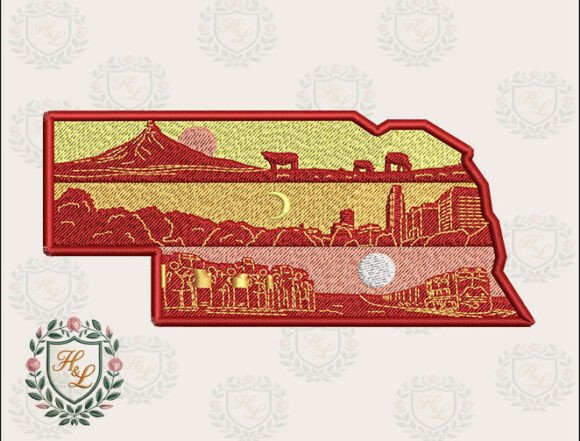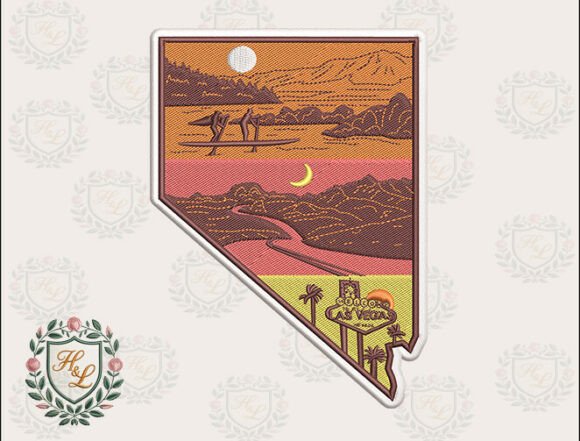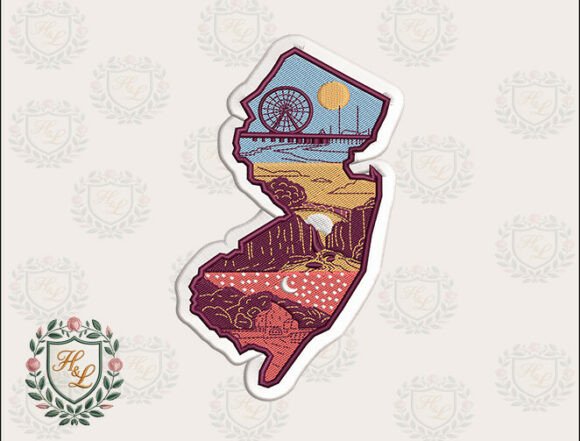
Layers of New Jersey Embroidery Files
A Craft Fair Designer’s Real-World Review Before Booth Day
As an embroidery designer who’s stitched through 17 craft fairs, three holiday markets, and countless Etsy restocks, I opened Layers of New Jersey Embroidery Files with one question: Will this stop someone mid-aisle? The answer? Yes—but only if you place it right. This isn’t a loud, cartoonish state outline or a minimalist line drawing. It’s layered—literally and visually—with dimension, rhythm, and regional warmth. Think modern rustic meets quiet pride: not kitschy, not corporate, but authentically handmade.
First Impression: Thoughtful, Not Trendy
The title alone sets the tone: Layers of New Jersey suggests depth—not just geography, but history, texture, coastline, farmland, and urban energy. That nuance translates beautifully into a machine embroidery design that feels intentional, not generic. It reads as premium at a glance, especially beside flashier, flatter state silhouettes. For boutique makers and small shop owners, that subtle distinction builds perceived value before a single stitch is sewn.
Where It Shines on Craft Fair Products
Tote bags: A standout. The layered composition fills space gracefully without overwhelming. On natural canvas or heavyweight cotton duck, the design breathes—no crowding, no visual fatigue. Customers consistently pause longer at totes featuring Layers of New Jersey Embroidery Files, especially when paired with neutral thread (heather gray, oatmeal, deep navy).
Aprons and tea towel embroidery: Works exceptionally well as a centered chest or lower-corner accent. Its balanced weight keeps it legible at 3.5–4 inches tall—ideal for functional handmade products where clarity matters more than drama.
Embroidered patches and fabric pouches: Here’s the caveat: avoid scaling below 2.75 inches. Tiny details in the layering—like subtle contour lines or fine textural breaks—blur on dense stabilizer or curved surfaces. At 3 inches and up, it’s crisp, distinctive, and instantly recognizable as a North America–inspired design.
Pillow covers and market bags: Excellent focal point. The design’s inherent structure anchors larger items without competing with patterned fabrics. On linen-blend pillows or unbleached cotton market bags, it reads as elevated, cohesive, and quietly meaningful—perfect for buyers seeking heirloom-quality handmade product.
Caps and curved surfaces: Proceed with caution. The layering relies on clean transitions between shapes. On structured caps, test stitch density first—dense fill areas may pucker on stiff buckram unless stabilized with cutaway + tear-away combo. Avoid placing near the bill curve unless you’re using a low-profile hoop and flexible thread.
What Makes It Sell—Beyond the Stitch
This isn’t just another embroidery file. It’s a storytelling tool. At a craft fair, customers don’t buy “a New Jersey design”—they buy connection: nostalgia, hometown pride, gift-for-someone-from-NJ sentiment. That emotional resonance boosts booth engagement and drives repeat interest in your full collection.
For Etsy sellers, Layers of New Jersey Embroidery Files photographs cleanly across devices. Its contrast-rich layers translate well in natural light mockups—no heavy editing needed. Pair it with a printable mockup showing three fabric options (oatmeal linen, indigo denim, charcoal twill), and conversion rates climb.
It also supports brand consistency. Whether you’re selling embroidered tea towels, aprons, or limited-run patches, this design carries the same calm confidence—making your small shop product line feel curated, not scattered.
Production Notes Every Embroidery Designer Should Check
- Test on scrap fabric first—especially textured towels or thick canvas. Layered fills can shift on uneven surfaces.
- Confirm thread contrast: Light fabric? Use deep forest green or slate blue. Dark fabric? Opt for cream or warm ivory—not stark white—to preserve softness.
- Review spacing and stitch density: If your machine flags high-density zones, reduce fill density by 5–8% rather than shrinking the entire design.
- Verify hoop size compatibility: Don’t assume it fits standard 4x4 hoops—some layered appliqué files require 5x7. Check before cutting production runs.
- Use the right stabilizer: Medium-weight cutaway for tote bags and aprons; lightweight tear-away for tea towels and patches.
- Create at least one real mockup—not just digital. See how light hits the layers in person. Does it read from 6 feet away? That’s your craft fair test.
- Compare fabric colors side-by-side: A design that pops on cream may disappear on beige. Swatch it.
- Confirm commercial licensing: Since this is positioned for craft fair and handmade market products, ensure your purchase includes rights for finished product resale—don’t assume.
Design Assets That Earn Their Spot on Your Table
In a sea of floral monograms and generic quotes, Layers of New Jersey Embroidery Files stands out because it’s specific without being exclusionary. It invites curiosity (“What are the layers?”) and rewards attention (subtle gradations, thoughtful balance). That makes it ideal for booth samples—people touch it, ask about it, and remember your brand.
It’s also highly repeatable for batch production. No tiny lettering to misread, no fragile lace-like motifs to snag. Just confident, clean layering built for reliability. For embroidery business owners managing tight deadlines, that predictability cuts stress—and keeps your craft fair prep on schedule.
One final note: while the description mentions “festive decorations,” hold off on using it for delicate ornaments or thin satin ribbons. Stick to stable, medium-weight woven fabrics where the design’s integrity stays intact. And always—always—check file format compatibility with your machine before loading into your embroidery software.
If you’re building a North America–themed collection—or simply want a versatile, emotionally resonant embroidery file that sells as both gift and statement—Layers of New Jersey Embroidery Files earns its place front-and-center on your craft fair table, your Etsy homepage, and your next round of handmade product development.